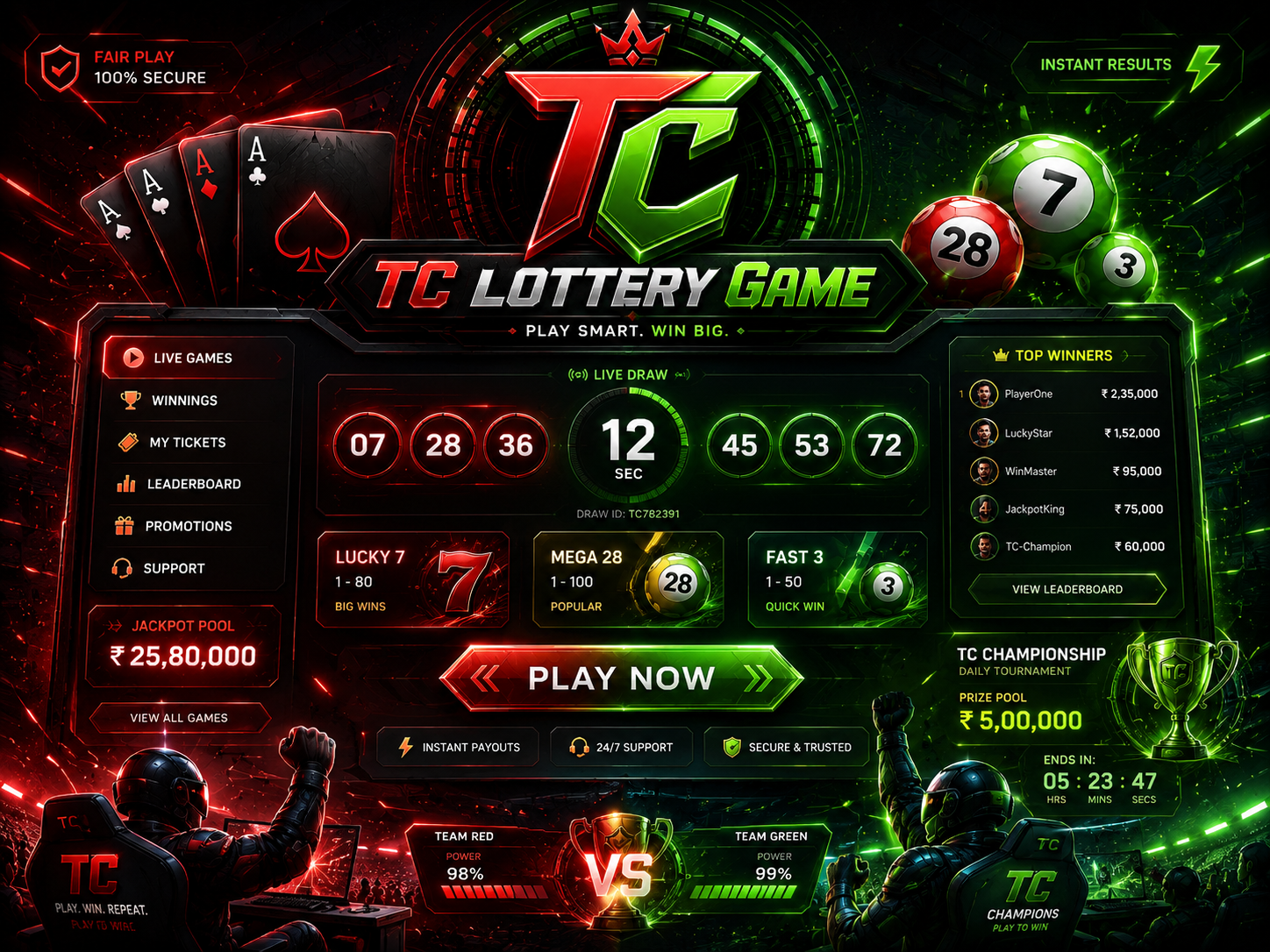
Field brief: the draw screen should be read as a control board first and a number display second. When an adult reader sees repeated balls, missing balls, red and green panels, or a countdown beside the board, the first job is not to guess the next result. The first job is to separate current display, past display, sample art, and prompt layers.
Omitted values and hot-cold talk can be useful only when the boundary is clear. A ball that has not appeared in a visible history row is not “due”. A ball that has appeared several times is not “strong”. The screen may show a row of number balls, side notes, history-style panels, and bright colour boards, but none of those parts changes a random or changing draw into a promised outcome.
What counts as an omitted value
An omitted value is a number or ball label that is absent from the set you are checking. That set must be defined before any note is made. Without a defined set, “missing” has no meaning.
Use a plain boundary:
- Current row: the balls shown for the present screen state, if the row is clearly current.
- Past row: a history row or earlier display, if the screen separates it from the current row.
- Sample row: a graphic or decorative row that should not be treated as a result.
- Unclear row: any row partly covered by a prompt, colour panel, or timing change.
If the row is unclear, do not record an omitted value. Mark the screen as not ready for comparison. A missing ball in a decorative panel is not a statistical event. A missing ball in a covered row is not a reliable omission. A missing ball in a past row tells you only about that past display, not about the next one.
What hot and cold numbers can and cannot say
Hot and cold labels are short names for frequency notes. “Hot” usually means a ball appeared more often inside the checked set. “Cold” usually means a ball appeared less often or did not appear inside the checked set. These labels are not instructions, warnings, or predictions.
The limit is simple: frequency describes what has already been counted. It does not show what must happen next. A bright board can make a repeated value feel important, especially when the countdown is active or a prompt appears on top of the screen. Keep the label small: hot means counted often in the chosen set; cold means counted rarely in the chosen set.
Do not mix rows. If the centre row is current and a side row is history, count them separately. If red and green panels divide states or groups, read nearby labels before adding anything to a note. Colour is a screen state, not proof that one number has a better path.
Quick check before making any frequency note
- Read the draw label or room title area first, so the board you are watching is not confused with another screen state.
- Check whether the countdown is active, closing, paused, or already in a result-display state.
- Identify whether the number row is current, past, sample, or decorative.
- Look for a prompt layer that may cover or change the next step.
- Only then write a short note such as “ball A absent from checked history row” or “ball B repeated inside checked past row”.
- If any part is unclear, stop the count and use the exit route rather than forcing a reading.
This is a method check, not a result check. It does not require a live feed, an account, a balance, or any private data. It only asks the reader to slow down and classify what is visible before giving meaning to a number pattern.
Hypothetical screen brief
Hypothetical example: an adult reader sees a centre row with balls A, B, C, and D. A side panel shows an older row with balls B, C, E, and F. A green panel sits near the centre row, while a red panel sits near the side panel. A small prompt briefly covers part of the board.
The clean note is not “B is hot” or “A is due”. The clean note is: centre row and side row must be kept separate. Ball B appears in both visible rows, but that is only a visible repetition across two checked rows. Ball A appears in the centre row only. Ball E appears in the side row only. The prompt makes any covered part uncertain until it clears.
If the reader wants an omission note, it must be attached to the set. “Ball A is absent from the side row” is different from “ball A is missing overall”. “Ball E is absent from the centre row” is different from “ball E is cold”. The first wording is a checkable observation. The second wording can easily become a guess.
Why short histories can mislead
A small visible history can look convincing because the same few symbols are close together. The eye notices clusters quickly. If a ball repeats twice in a short strip, it may feel active. If another ball is absent, it may feel overdue. Neither feeling is enough for a probability claim.
Short histories are especially risky when the screen is busy. A countdown, a colour panel, a pop-up, and a row of balls all compete for attention. Under that pressure, a reader may count the same row twice, include sample art, or treat an older row as if it belonged to the current state.
The safer rule is to write fewer notes with clearer boundaries. One correct note about a single row is better than a long hot-cold list built from mixed panels. If the row title, timing state, or prompt layer is uncertain, the frequency note should be held back.
Board colour is not a probability signal
The home screen guidance treats red and green boards as screen states that need labels, not as reasons to rush. This matters for hot and cold reading. A repeated ball beside a bright colour may feel more meaningful than the same ball in a quieter area, but the colour does not add statistical weight by itself.
Read the nearby text first. If the panel appears to group options, mark it as a group panel. If it appears to show state, mark it as a state panel. If it is decorative, do not include it in any count. When the panel meaning is unclear, avoid using that area for omission or frequency notes.
When a prompt appears over the board
A prompt layer can change the reading task. It may cover balls, hide a row title, or make the next step unclear. Treat the prompt as a pause point. Do not count what you cannot see fully. Do not assume that a partially covered ball belongs to the current row. Do not continue just because the clock is moving.
If a third-party app asks for money, identity details, or extra permissions, stop and read its own terms. The guide page does not manage accounts, balances, or app actions. It is information only and does not promise a result.
Practical notation that avoids prediction
Use neutral words. They keep the note useful and stop it from becoming a claim about the next draw.
- Use “seen in checked row” instead of “strong”.
- Use “not seen in checked row” instead of “due”.
- Use “repeated in visible history” instead of “hot pick”.
- Use “row unclear” instead of guessing through a covered panel.
- Use “sample or decorative row excluded” when a number line is not part of the result area.
These notes are easier to audit later because they describe the screen, not an expectation. They also fit the site’s control-board approach: label, timing, number row, colour state, prompt layer, and exit route.
Related reading on draw-screen discipline
For a broader pause-and-check routine, read TC Lottery Draw Gap Checks for Adult Readers. It is most relevant when a delay, gap, or uncertain state makes a number feel more important than it should.
For a calmer walk-through of the screen areas, read How to Read TC Lottery Draw Screens Calmly in India. It supports the same habit used here: read the timer, row, board colour, and prompt layer before giving meaning to any ball.
Working limit for adults in India
This page does not provide live results, public result verification, account access, payment handling, or a prediction model. No specific draw result is checked here because no verifiable public result material has been supplied for this brief. Any real result note would need a publicly checkable source, the exact draw identifier used by that source, and the matching date shown by that source before it could be cited.
Until that material is available, the only responsible work is method: classify the row, keep current and past displays apart, exclude sample art, pause on prompts, and avoid treating omissions or hot-cold labels as forecasts. If the screen state, label, timing, or emotion feels unclear, use the exit route and stop the count.
Responsible entertainment note: This article is for screen reading and risk awareness only. It does not provide betting advice, account service, payment handling, outcome prediction or any guaranteed result.